Reading Your Garden Soil: Simple Tests and What They Tell You
Problem: Guessing Rather Than Knowing What’s Underfoot
Many gardeners and curious homeowners respond to plant woes by changing watering schedules, switching fertilizers, or moving plants—often based on guesswork. Soil is the foundation of garden health, yet it’s seldom observed directly. Small, quick tests reveal whether the real problem is texture (sand, silt, clay), structure (how particles stick together), drainage, compaction, or simply a lack of organic matter. Understanding a few principles turns guesswork into informed action.
Principles: What Soil Tests Can Tell You
Before doing tests, it helps to know what you are looking for and why it matters.
Texture: the particle mix
Texture—proportions of sand, silt, and clay—controls water retention, ease of root growth, and nutrient availability. Sandy soils drain quickly and feel gritty; clay holds water and feels sticky; silt is smooth and sits between the two. Texture is intrinsic and changes slowly.
Structure: how particles aggregate
Structure describes how soil particles form crumbs or clods. Good structure has stable aggregates with pores for air and water. Poor structure (massive or compacted soil) limits root growth and water infiltration even if the texture would otherwise be fine.
Porosity and drainage
How fast water moves through soil affects drought stress and root oxygen. Porosity depends on both texture and structure; organic matter and earthworms increase large pores and improve drainage in clay soils while enhancing water-holding in sandy soils.
Organic matter and life
Dark, crumbly soil rich in leaf litter and decomposed material holds nutrients and feeds microbes and worms. Smell, color, and the presence of worms are quick indicators of biological activity.
Examples: Four Simple Tests You Can Do in an Afternoon
These tests are low-effort and use common household items. Do them in a few different spots: raised beds, lawn, under a shrub, and a new planting area.
1. The Ribbon (Texture) Test
- Moisten a teaspoon of soil until pliable like putty.
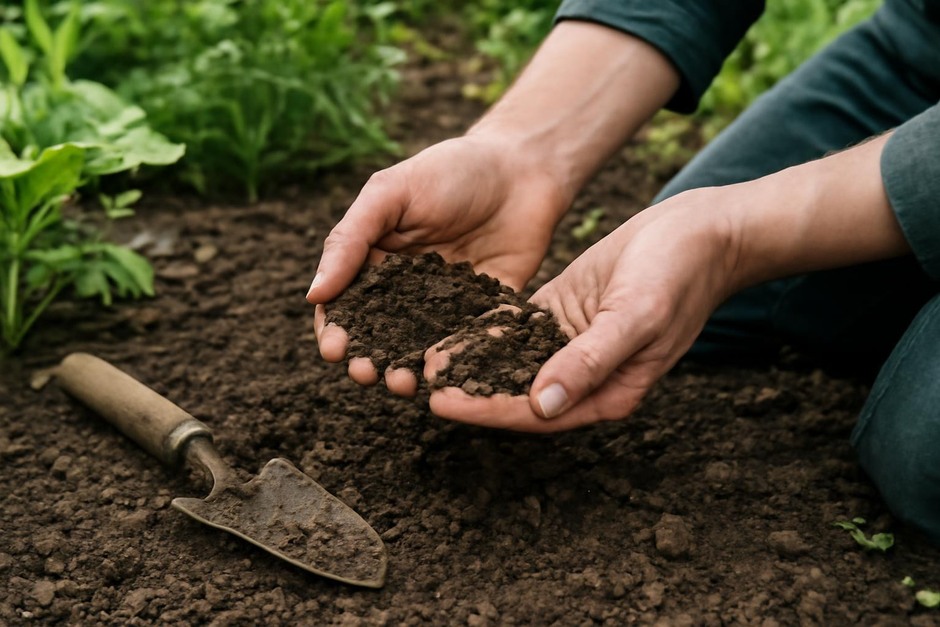
- Press it between your thumb and forefinger to form a ribbon.
- Observe the longest ribbon you can form before it crumbles.
What it tells you: A short, crumbly result indicates sandy or silty soil; a long, plastic ribbon indicates significant clay. This helps predict drainage and whether the soil will compact when wet.
2. The Jar (Composition) Test
- Place a heaping cup of soil into a clear jar, fill to the top with water, add a teaspoon of dish soap, and shake well.
- Let it sit undisturbed for 24–48 hours. Sand settles first, then silt, with clay staying suspended longest.
- Estimate layers by eye to get rough percentages.
What it tells you: This gives a visual sense of the soil’s makeup. If sand is dominant, you’ll know to choose plants and amendments that help retain moisture; if clay dominates, focus on improving drainage and structure.
3. The Squeeze (Compaction) and Infiltration Test
- Dig a small hole about 10 cm (4 inches) deep and fill it with water. Time how long it takes to drain.
- Take a handful of soil from the same depth and squeeze it lightly—does it hold together or break apart?
What it tells you: Slow drainage suggests compaction or dense clay structure. A soil that forms a tight ball that doesn’t crumble indicates packing; loosen by aerating and adding organic matter.
4. The Worm and Smell Test (Life and Organic Matter)
- Dig a small square about 20 cm (8 inches) across and look for earthworms and roots.
- Smell the soil: a sweet, earthy scent suggests active microbial life; a sour, bad smell indicates poor aeration or excess moisture.
What it tells you: Worms and a pleasant earthy smell signal healthy biology. If life is sparse, add compost and avoid overworking the soil.
Practice Checklist
- Perform the Ribbon Test in at least three garden spots and note results.
- Run the Jar Test for one representative sample and record approximate percentages of sand/silt/clay.
- Do the Infiltration Test (10 cm hole) and the Squeeze Test to assess compaction.
- Dig a small pit to count worms and note odor; repeat seasonally.
- If clay-rich: add coarse organic matter, avoid excessive tilling, and consider raised beds for sensitive plants.
- If sandy: add compost and mulches to increase water and nutrient retention.
- If compacted: introduce organic material, use deep-rooted cover crops, and avoid working soil when wet.
- Record observations in a notebook with date and location; repeat tests annually to track change.
These simple, repeatable methods turn soil from an assumed problem into a known quantity. With a few afternoons of observation and small, targeted interventions, you’ll make steady improvements—each small discovery guiding the next thoughtful choice in your garden or yard.